





Please select a language

Please select the country/region where you would like to introduce your business.

Contact Us
Contact Us

Please select a language

Please select the country/region where you would like to introduce your business.

Knowledge What Is a Vulnerability Assessment? Explaining Its Necessity, Costs, and How to Choose a Service


What Is a Vulnerability Assessment? Explaining Its Necessity, Costs, and How to Choose a Service

Recent years have seen rapid digital transformation (DX) across companies, while cyberattack techniques continue to grow more sophisticated, exposing many organizations to increasing security threats.

Proactive security measures are essential to protect your company’s information assets and customer trust. Among these, vulnerability assessments are a fundamental and critical undertaking.

Across countries, responses to vulnerabilities are increasingly being codified through guidelines and regulation. In Japan and the U.S., the IPA (Information-technology Promotion Agency, Japan) and NIST (National Institute of Standards and Technology) provide guidelines; in Europe, the NIS2 Directive and the Digital Operational Resilience Act (DORA) mandate organizational measures for critical infrastructure and the financial sector, making such efforts indispensable to operating a business.

This article provides a clear explanation of the basics of vulnerability assessments, why they are necessary, their types, typical costs, and how to choose the right service for your organization.

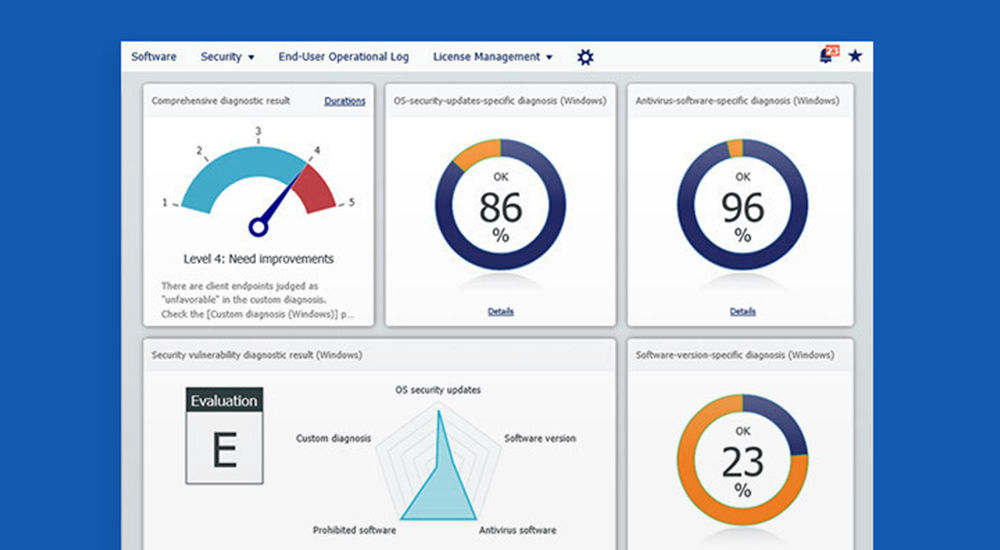
1. What Is a Vulnerability Assessment? Understanding the Basics of Security Measures

A vulnerability assessment is the first step in corporate security measures, intended to identify and visualize latent weaknesses and flaws in computers, network devices, and software. Let’s start by correctly understanding its basic concept and purpose.

A vulnerability is a weakness or flaw in software

A vulnerability is a security weakness in operating systems, software, web applications, and more, caused by design errors or bugs in programs. If left unaddressed, such weaknesses can be exploited in cyberattacks.

For example, they may allow unauthorized access, enable the theft of personal information through illicit operations, or result in website defacement. Because new vulnerabilities can be discovered as long as systems are in operation, continuous countermeasures are required.

The purpose of a vulnerability assessment is to make security risks visible

The primary purpose of a vulnerability assessment is to comprehensively identify where and what kinds of vulnerabilities exist in your operating systems and developed applications, thereby visualizing security risks. Through the assessment, you identify potential attack points and evaluate their severity.

This enables you to decide which vulnerabilities to address first and to plan and execute effective and efficient security measures.

Objective Details
Risk visualization Comprehensively identify and list the vulnerabilities present in the system
Severity assessment Evaluate the business impact of each discovered vulnerability
Prioritization of measures Determine the order in which to address vulnerabilities based on the evaluation results
Demonstrating safety Provide objective reports to partners, customers, and regulators to prove system safety

2. Why Is a Vulnerability Assessment Indispensable?

In an era where most companies naturally provide web services, the importance of vulnerability assessments is growing. It is vital to recognize how neglecting assessments can lead to significant risks.

Serious risks from leaving vulnerabilities unaddressed

If vulnerabilities are discovered but left unremedied, malicious attackers may exploit them, causing various damages.

Typical risks include the leakage of confidential information such as customer data and credit card details. Information leaks lead not only to financial losses from compensations and regulatory fines but also directly to a loss of corporate reputation.

Other potential consequences include brand damage from website defacement and business interruption due to ransomware infections—situations that can threaten the business’s continuity itself.

A critical initiative for protecting business trust

Regularly conducting vulnerability assessments and promptly fixing identified issues is crucial not only to protect your information assets but also to maintain and enhance trust from customers and business partners.

Services handling personal data or e-commerce sites with payment functions especially require advanced security measures.

Conducting vulnerability assessments demonstrates a sincere corporate commitment to security, fostering customer confidence in using your services. In turn, this strengthens competitiveness.

3. How Do Vulnerability Assessments Differ from Penetration Tests?

A term often confused with vulnerability assessments is “penetration testing.” The two differ in purpose and methodology, and it’s important to use them appropriately depending on your situation.

Difference in purpose: Comprehensive survey vs. concrete intrusion test

The purpose of a vulnerability assessment is to comprehensively identify vulnerabilities lurking in a system.

In contrast, the purpose of a penetration test is to demonstrate whether it is possible to break into a system by exploiting vulnerabilities and, if so, what kind of damage could result.

You can think of a vulnerability assessment as a comprehensive health check and a penetration test as a targeted, in-depth examination for specific threats.

Difference in method: Whole-system scanning vs. attacker-simulation

Vulnerability assessments investigate the entire system comprehensively based on checklists of known vulnerability patterns, combining automated tools and manual checks.

Penetration tests, on the other hand, are conducted by security experts who, adopting an attacker’s perspective, attempt intrusions using various techniques. They evaluate overall resilience, including human factors, based on realistic attack scenarios.

How to use both appropriately to choose the right test

Neither approach is inherently superior; the key is to use them according to your goals. First, conduct regular vulnerability assessments to maintain overall security posture and obtain comprehensive visibility into vulnerabilities.

On top of that, run penetration tests for particularly critical systems or when you want to validate resilience against emerging threats from a more practical perspective.

Item Vulnerability Assessment Penetration Test
Purpose Comprehensive detection of vulnerabilities and risk evaluation Validate resilience to specific attack scenarios
Method Broad scans via tools plus manual checks Expert-led intrusion attempts from an attacker’s perspective
Scope Entire target system Predefined, specific scope and goals
Frequency Regular (e.g., annually or quarterly) As needed (e.g., upon significant system changes)

4. Main Types of Vulnerability Assessments and Target Areas

Vulnerability assessments are categorized by the characteristics of the target system. Choose the appropriate assessment based on what you need to protect.

Type Primary Targets Example Vulnerabilities Discovered
Web application assessment E-commerce, member sites, business systems SQL injection, cross-site scripting (XSS)
Platform (network) assessment Web servers, OS, network devices Unnecessary open ports, outdated software
Mobile app assessment iOS/Android apps Interception of communications, weak anti-reversing
Cloud configuration review AWS, Azure, GCP configurations Misconfigured permissions, inadvertent public exposure

Web application assessment

This targets browser-based web applications such as e-commerce sites, member portals, and business systems.

It detects web-specific vulnerabilities such as SQL injection and cross-site scripting (XSS), focusing on commonly targeted functions like authentication and personal data input forms.

Platform (network) assessment

This targets the underlying platform on which applications run—web servers, operating systems, databases, and network devices.

It checks for unnecessary open ports, outdated OS or middleware versions with known vulnerabilities, and configuration errors, evaluating the overall security strength of the system.

Mobile application assessment

This targets native iOS and Android applications. It evaluates resilience against reverse engineering, whether sensitive data is stored in plaintext, whether communications with servers are properly encrypted, and other risks specific to mobile environments.

Cloud configuration review

This targets configurations of cloud services such as AWS, Microsoft Azure, and Google Cloud Platform. While flexible, cloud environments are prone to configuration mistakes that can lead to major security incidents. It reviews for misconfigured access permissions, unintended data exposure, and whether the customer has fulfilled their configuration responsibilities under the shared responsibility model.

5. How Vulnerability Assessments Are Conducted and How the Methods Compare

Vulnerability assessments are typically conducted via two approaches: automated tool-based testing and manual testing.

Each has strengths and weaknesses; combining them yields more accurate results.

Comparison Item Tool-based Assessment Manual Assessment
Accuracy △(focuses on known vulnerabilities) ◎(can uncover unknown/latent vulnerabilities)
Coverage ◎(mechanical, wide-ranging checks) 〇(expert-driven, prioritized investigation)
Cost 〇(relatively inexpensive) △(tends to be more expensive)
Speed ◎(completed in a short time) △(requires time)
Best suited for Regular broad checks; early development phases Detailed reviews of critical systems; pre-release final checks

Tool-based assessments: Features, pros, and cons

This approach uses dedicated tools to automatically scan for vulnerabilities.

It is suitable for regular, broad checks thanks to its speed and coverage, and is relatively cost-effective. However, tools are largely limited to known vulnerability patterns and struggle to detect issues tied to complex specifications or design, such as business-logic flaws.

Also, determining whether a detected issue is truly risky (e.g., false positives) may require expert judgment.

Manual assessments: Features, pros, and cons

Security experts manually probe for vulnerabilities while understanding the system’s specifications and business logic. This approach excels at uncovering higher-order and latent risks that tools often miss, such as access control weaknesses and issues that arise only through complex user flows.

The trade-offs are higher cost and longer timelines due to the expert skills and effort required.

6. What Are the Typical Cost Ranges for Vulnerability Assessments?

Cost is one of the most important considerations when planning a vulnerability assessment.

While costs vary widely by target, scope, and method, it is helpful to understand general benchmarks.

Costs vary by target and scope

The largest cost drivers are the size and complexity of the target.

For web application assessments, the number of dynamic pages/screens and functions typically forms the basis for estimation.

Small, static sites are relatively inexpensive, while large e-commerce sites with login, payment, and database integrations are costlier due to greater effort. For platform assessments, the number of target IP addresses is often the cost basis.

7. How to Choose a Vulnerability Assessment Service That Fits Your Organization

Many vendors offer vulnerability assessment services, making selection challenging.

Use the three points below to choose a service that aligns with your goals and requirements.

Clarify the assessment’s purpose and scope

First clarify why you are conducting the assessment. The required depth and type differ depending on whether it’s the final pre-release check for a new service or a periodic check to maintain your security posture.

Then define the system scope in concrete terms (URLs, IP addresses, function lists, etc.). Clear requirements prevent misunderstandings with vendors and help you obtain accurate quotes.

Verify assessor skills and track record

For manual assessments in particular, assessor skill and experience greatly influence quality.

Check for relevant certifications (e.g., Registered Information Security Specialist in Japan) and whether the vendor has substantial experience in your industry.

It is also important that they routinely ingest and incorporate the latest attack techniques and vulnerability intelligence into their assessments.

Prioritize clear reporting and strong post-assessment support

Finding vulnerabilities is not the goal in itself. The most important part is to correctly understand each vulnerability and its risk and to translate that into concrete remediation.

Confirm that the vendor provides clear, accessible reports that allow non-experts to intuitively grasp severity and impact.

Robust aftercare—such as Q&A sessions, guidance on fixes, and responsive support—should also be key selection criteria.

8. The Typical Process of a Vulnerability Assessment

What does the process look like when you engage a vendor? Below are four common steps.

Step1. Preparation and discovery

The vendor first conducts a discovery session to learn the system’s architecture and functions. Prepare materials such as specifications and network diagrams to facilitate a smooth assessment.

Both parties confirm and agree on scope, schedule, and emergency contacts at this stage.

Step2. Conducting the assessment

The vendor performs the vulnerability assessment according to the agreed schedule. Because high load may be placed on target systems during testing, assessments are often run outside business hours (e.g., nights or weekends). If a critical vulnerability is discovered, a preliminary alert may be issued promptly.

Step3. Reporting and remediation recommendations

Upon completion, the vendor delivers a report detailing each discovered vulnerability, its severity, reproduction steps, and specific remediation methods. Typically, a debriefing session is held based on the report, and questions and answers help deepen understanding of the results.

Step4. Reassessment

Based on the report, your development team implements fixes for the identified vulnerabilities. After remediation, it is common to conduct a targeted reassessment limited to the previously flagged items to confirm that the countermeasures have been correctly applied. This ensures a reliable improvement in the overall security level.

9. Conclusion

This article comprehensively explained the basic concepts, necessity, types, costs, and selection criteria for vulnerability assessments. A vulnerability assessment is a fundamental and one of the most important security measures to protect your systems and business from cyberattacks. In particular, to comply with European cybersecurity regulations such as NIS2 and DORA, it is essential to make vulnerabilities visible and build a framework for continuous management.

By accurately understanding your organization’s situation and regularly conducting appropriate assessments aligned with your objectives, you can continue to provide safe and highly reliable services.

KDDI Cloud Inventory provides one-stop management of device security processes and a wide variety of cloud-based security features. Contact us to learn more.

Do you need more information?

Strengthening Security and Governance at Global Branches

Strengthening Security and Governance at Global Branches White Paper

Connect with KDDI consultants for inquiries and quotations.